Reviewing the Welcome to the Zoo SVG for Embroidery
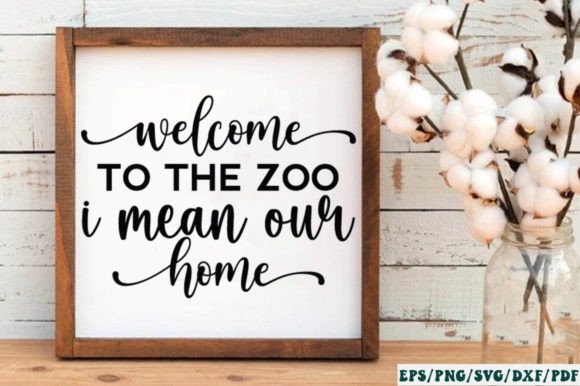
As a designer who spends half my life staring at stitch previews and the other half unpicking tangled thread, I approach every new digital embroidery file with a healthy dose of skepticism. We have all been there: you download a cute graphic, load it into your machine, and realize the lettering is too thin for satin stitch or the density will turn your fabric into cardboard. That is why I took a close look at the Welcome to the Zoo I Mean Our Home SVG to see if it holds up in a real-world embroidery project.
This design falls squarely into the popular farmhouse and humorous home decor niche. It is labeled as a Funny Farmhouse svg and Farmhouse Sign svg, which tells us immediately about its intended aesthetic. However, since the download includes SVG, DXF, PNG, EPS, and PDF formats, we are technically looking at vector graphics that need to be converted or interpreted for stitching. For those of us running a craft business or selling on Etsy, understanding how this translates from a screen graphic to a tactile handmade product is crucial.
First Impressions and Visual Personality
The immediate mood of this design is playful and welcoming. The phrase "Welcome to the Zoo I Mean Our Home" relies heavily on typography to deliver the punchline. In a graphic context, this works beautifully for vinyl cutting or print-on-demand. For embroidery, however, the visual personality depends entirely on how you handle the text. The layout suggests a stacked, centered composition, which is ideal for stability in the hoop.
When I visualize this as a machine embroidery design, I see potential for a mix of stitch types. The larger words like "Zoo" and "Home" could carry a bold fill stitch or a thick satin stitch border, while the connecting phrases might work best as a clean running stitch or a lighter font weight. The charm lies in the contrast between the chaotic implication of a "zoo" and the cozy reality of "home." This duality makes it a strong candidate for family-oriented items.
Real-World Application: The Custom Tote Test
To evaluate its practicality, I imagined using this design for a custom order: a set of canvas tote bags for a mother of three. This is a classic scenario for an Etsy seller. The goal was to create a durable, washable item that feels personalized but not overly childish.
Using the SVG format, I scaled the design to fit a 5x7 inch area. On a sturdy cotton canvas, the design performed well. The key here is thread colors. I chose a deep navy for the main text and a mustard yellow for the accent word "Zoo." This high contrast ensured readability from a distance. If you are making a personalized gift, this color strategy helps the joke land instantly. The resulting finished product felt professional, not like a hobbyist experiment. Customers appreciate when the stitching looks intentional and crisp, which builds trust in your small shop product quality.
Versatility Across Product Lines
Beyond tote bags, this design has legs in several categories. For sweatshirt embroidery, the humorous tone fits perfectly on a crewneck for a tired parent. It also works well for baby embroidery projects, such as bibs or onesies, where the "zoo" reference is literal and cute. However, you must adjust the scale. A design that looks balanced on a pillow cover will overwhelm a baby cap.
For holiday embroidery or seasonal gifts, this design is evergreen. It does not rely on specific holidays, making it a safe bet for year-round inventory. Whether you are creating custom apparel for a family reunion or an embroidered patch for a diaper bag, the message remains relevant. As a digital embroidery file source, it provides the flexibility to resize without losing vector clarity, which is essential for adapting to different hoop size constraints.
Technical Considerations and Pitfalls
While the concept is strong, there are areas where caution is needed. Since this is provided primarily as a graphic file (SVG/DXF) rather than a pre-digitized stitch file, the burden of digitization falls on you. If you are not an experienced digitizer, you might face challenges with stitch density. Text-based designs can easily become too dense, causing puckering, especially on thinner fabrics.
Here are specific scenarios where you should proceed carefully:
- Small Hoop Sizes: If you shrink this down for a 4x4 hoop, the smaller words may become illegible. Ensure the minimum stroke width is sufficient for your needle size.
- Textured Fabrics: On terry cloth or fleece, fine details get lost. Use a heavier stabilizer and consider simplifying the font if the original SVG has intricate serifs.
- Stretchy Fabric: For tote bag design applications on knit materials, the horizontal width of the phrase can cause distortion. Always use a cut-away stabilizer for stretchy garments.
- Dense Stitch Areas: If you choose to fill the letters completely, test on scrap fabric first. Too much thread buildup can make the garment uncomfortable to wear.
Enhancing Brand Consistency and Value
For creative entrepreneurs, consistency is key. Using a design like Welcome to the Zoo I Mean Our Home SVG allows you to tap into the popular farmhouse trend while adding a unique twist. When customers see a well-executed version of this design, it reinforces the perception of quality. It shows that you understand both the humor and the technical requirements of commercial embroidery.
Moreover, this design lends itself well to printable mockup creation. Before you even stitch a single thread, you can use the PNG or EPS files to create realistic previews for your online store. This saves time and materials, allowing you to gauge customer interest before committing to production. High-quality design assets like this streamline the workflow for busy makers.
Practical Designer Notes
Before you list this as a new item in your shop, keep these practical tips in mind:
- Test on Scrap Fabric: Never run a new conversion directly on customer goods. Check for thread breaks and tension issues.
- Check Thread Contrast: View your design in black and white. If the elements blend together, adjust your color palette or add outlining stitches.
- Verify Licensing: The product description mentions it is a graphic download. Confirm whether the license allows for commercial use of the physical stitched items. Most SVG licenses do, but always read the fine print.
- Stabilizer Selection: Match your stabilizer to your fabric. A no-show mesh works for lightweight tees, while a heavy tear-away is better for denim jackets.
- Inspect Small Details: Zoom in on the vector file. Are there any stray nodes or overlapping paths that could confuse your digitizing software? Clean up the file before converting.
In conclusion, the Welcome to the Zoo I Mean Our Home SVG is a versatile asset for those willing to put in the digitization work. It bridges the gap between trendy graphics and functional Crafts products. With careful attention to stitch type and fabric choice, it can become a staple in your embroidery file library, driving engagement and sales for your handmade business.