Reviewing Every Cat is My Best Friend Svg Design for Embroidery
As a designer who has spent years digitizing and reviewing files for real-world application, I approach every new asset with a critical eye. We are not just looking at pretty pictures on a screen; we are evaluating how lines translate to thread, how shapes hold up under the needle, and whether a design will survive the wash cycle while maintaining its charm. Recently, I took a close look at Every Cat is My Best Friend Svg Design, a digital download that promises to appeal to the massive demographic of cat lovers. While the product description highlights it as an SVG bundle suitable for various cutting machines, my focus here is strictly on its potential and pitfalls when adapted for embroidery projects.
First Impressions: Mood and Visual Personality
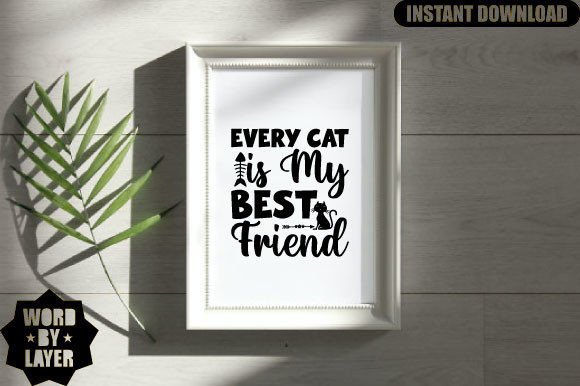
The immediate takeaway from Every Cat is My Best Friend Svg Design is its playful, unapologetic affection for felines. The typography suggests a casual, handwritten vibe, which pairs naturally with whimsical cat illustrations. For an embroidery designer, this combination presents both an opportunity and a challenge. Hand-lettered styles often require careful digitizing to ensure the curves remain smooth without excessive stitch counts that cause puckering. The "funny cat" theme implies a lighthearted mood, making it ideal for gifts that are meant to evoke a smile rather than convey formal elegance.
When I visualize this design stitched out, I see it working best on items that embrace comfort and personality. It is not a stiff, corporate logo. It is a conversation starter. The layout appears balanced, but in embroidery, balance is determined by stitch density and placement. A design that looks centered on a vector screen might feel heavy if the fill stitches are too dense on a lightweight fabric. Therefore, the visual personality of this piece demands a thoughtful approach to material selection.
Real-World Application: From Screen to Stitch
To truly test the viability of Every Cat is My Best Friend Svg Design, I imagined a specific client project: a custom embroidered tote bag for a local boutique specializing in quirky, handmade goods. Tote bags are typically made from canvas or cotton duck, fabrics that can handle moderate stitch density but still require proper stabilization. In this scenario, the design would serve as the central focal point.
If I were producing this as a handmade product for an Etsy seller, I would consider scaling the design to fit a 5x7 hoop. This size allows enough room for the text to be legible without becoming so large that the stitching time becomes prohibitive for a small shop product. The cat elements, likely featuring simple shapes, would benefit from satin stitches for outlines and fill stitches for larger bodies, ensuring a plush, textured look that appeals to tactile buyers. However, because the source file is an SVG, it is crucial to remember that this is a vector graphic, not a pre-digitized embroidery file. This means the designer must convert the paths into stitch data, paying close attention to direction and underlay.
Beyond tote bags, this design has strong potential for custom apparel. Imagine it on the back of a oversized sweatshirt or the chest pocket of a denim jacket. The "crazy cat lady" aesthetic fits perfectly with current trends in casual wear. For baby items, such as a onesie or burp cloth, the design would need significant simplification. Tiny details in kitten faces can get lost or become scratchy if not digitized with fine running stitches or left as applique to reduce bulk on sensitive skin.
Navigating Technical Challenges
While the concept is charming, executing Every Cat is My Best Friend Svg Design requires technical vigilance. One major consideration is the interplay between text and imagery. In embroidery, small lettering can easily merge if the stitch density is too high or if the fabric has a loose weave. I recommend testing the text portion separately on scrap fabric to ensure legibility. If the font includes thin serifs or intricate loops, these may need to be thickened slightly during the digitizing process to prevent thread breaks or poor coverage.
Fabric texture also plays a pivotal role. On textured fabrics like terry cloth towels or fuzzy fleece, the details of the cat’s face might disappear. In such cases, converting parts of the design into an applique design could be a smart move. By using fabric patches for the cat shapes and only stitching the outline and text, you reduce stitch count, minimize puckering, and add a professional, layered look. This technique is particularly useful for holiday embroidery projects where durability and visual impact are key.
Curved surfaces present another hurdle. If you plan to put this on a cap, the distortion caused by the curve can stretch the design horizontally. You must adjust the pull compensation in your digitizing software to counteract this. Additionally, dark fabrics require careful thread color selection. A light-colored thread on a black shirt needs sufficient density to cover the background, but too much density can make the garment stiff. Always check your design in black and white mockups to verify contrast before committing to thread colors.
Commercial Viability and Brand Consistency
For craft business owners and digital product sellers, the appeal of Every Cat is My Best Friend Svg Design lies in its niche targeting. Cat lovers are a passionate market, and products that speak directly to their identity tend to sell well. However, professionalism is paramount. A poorly stitched version of this design can damage brand trust. Customers expect clean edges, no visible backing, and consistent tension. Using the right stabilizer is non-negotiable. For stretchy fabrics like t-shirts, a cut-away stabilizer provides the necessary support to keep the design intact after multiple washes.
When creating printable mockups or digital previews for your online store, ensure that the embroidered sample looks realistic. Show the texture of the thread and the slight raise of the stitches. This transparency helps manage customer expectations and reduces returns. Remember, while the SVG file is versatile for cutting machines, its value in embroidery depends entirely on your digitizing skills. Do not assume that a clean vector line equals a clean stitch path.
Practical Designer Notes
Before launching any project with Every Cat is My Best Friend Svg Design, follow these practical steps:
- Test on Scrap Fabric: Always run a test stitch-out on the same type of fabric you intend to use for the final product. This reveals issues with tension and density.
- Check Thread Contrast: Ensure your thread colors stand out against the fabric. High contrast improves readability, especially for the text component.
- Review Stitch Density: High density can cause puckering. Use pull compensation and appropriate underlay stitches to stabilize the design.
- Confirm Hoop Size: Make sure the design fits comfortably within your machine’s hoop, leaving enough margin for clamping.
- Inspect Small Details: Zoom in on the cat’s features. If details are smaller than 2mm, consider simplifying them or using applique.
- Verify Licensing: Since this is a digital download, confirm whether the license allows for commercial use of finished physical items. Most SVG licenses permit selling physical products but restrict reselling the digital file itself.
In conclusion, Every Cat is My Best Friend Svg Design offers a delightful foundation for creative embroidery projects. Its success, however, hinges on the designer’s ability to translate vector art into durable, attractive stitches. By respecting the limitations of fabric and thread, and by prioritizing technical precision, you can turn this simple graphic into a standout piece in your Crafts and Graphics portfolio. Whether for a personalized gift or a small shop product, the key is to let the charm of the cat shine through without letting technical errors overshadow the message.