Reviewing the Bestie Squad SVG for Embroidery Projects
As a designer who has spent years translating digital vectors into tangible thread, I approach every new asset with a critical eye. We are not just looking at pretty lines on a screen; we are evaluating how those lines will behave under the needle, how they will hold up after washing, and whether they will resonate with the end customer. Recently, I evaluated the Bestie Squad Svg Design, a popular file often marketed toward cutting machines but increasingly used as a foundation for embroidery digitizing and applique work. This review breaks down its practical application for craft business owners, Etsy sellers, and serious hobbyists.
First Impressions: Mood and Visual Personality
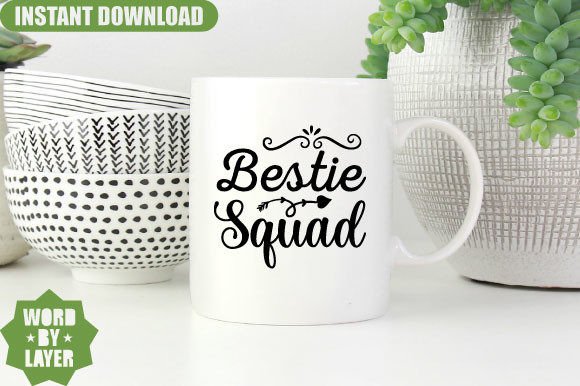
The first thing that strikes you about this design is its playful, inclusive energy. The typography usually associated with "bestie" themes tends to lean heavily into script fonts that can be notoriously difficult to stitch cleanly. However, the layout of this specific bundle suggests a balance between fun and legibility. The mood is casual, youthful, and celebratory, making it an ideal candidate for personalized gifts and boutique merchandise. It does not try to be overly elegant or formal; instead, it embraces a relaxed aesthetic that fits perfectly with modern casual wear.
For embroidery designers, the visual personality here is key. The shapes are generally bold, which is a good sign for stitch clarity. When converting or using such graphics for embroidery, we look for closed shapes and sufficient spacing between elements. This design appears to offer that structural integrity, reducing the risk of thread breaks or messy pull-compensation issues during the stitching process.
Real-World Application: The Tote Bag Test
To truly understand the value of a design, you must visualize it on a finished product. I imagined applying the Bestie Squad Svg Design to a heavy-duty canvas tote bag, a staple item for many small shop products. Canvas is a forgiving fabric, but it requires careful attention to stitch density to prevent puckering.
In this scenario, the design would likely work best as an applique design. By using a satin stitch border around the cut fabric letters, you reduce the overall stitch count and create a textured, professional look that stands out against the coarse weave of the tote. This approach also minimizes the risk of the design becoming too stiff, which is a common complaint with dense fill stitches on flexible items. For an Etsy seller, this method offers a high perceived value while keeping production time manageable.
Sweatshirts and Custom Apparel
Moving from accessories to apparel, consider a unisex crewneck sweatshirt. This is a high-demand item for holiday embroidery and group gifts. Here, the challenge shifts to fabric texture and stretch. Fleece-backed cotton can be tricky. If you choose to stitch the design directly without applique, you must ensure your stabilizer is robust enough to support the garment. A cut-away stabilizer is non-negotiable here to maintain the shape of the hoop area after repeated wear and washing.
The "funny friends" aspect of the bundle suggests it might include additional graphic elements or variations. These smaller details need scrutiny. On a dark navy or black sweatshirt, thread color contrast becomes vital. You would need to test bright whites, neons, or metallics to ensure the message pops. A poor color choice can render even the best design invisible from a distance.
Navigating Technical Challenges
While the design is appealing, there are areas where caution is required. Not every surface is suitable for this type of graphic. Let us discuss where you should proceed with care.
- Small Hoop Sizes: If you are working with a 4x4 inch hoop, you may need to scale the design down significantly. Be wary of tiny lettering. Once stitched, fine details can merge together, especially if using thicker threads like rayon or polyester. Always check the legibility at reduced sizes.
- Curved Surfaces: Applying this to caps or hats introduces distortion. The front panel of a cap is narrow and curved. A wide horizontal design like "Bestie Squad" might wrap awkwardly around the curve. You may need to adjust the arch or break the design into smaller stacked elements to fit the available space properly.
- Thin or Stretchy Fabrics: Avoid using dense fill stitches on lightweight t-shirts or jersey knits without proper stabilization. The weight of the thread can cause the fabric to sag. In these cases, a running stitch outline or a lightweight applique technique is far superior to a solid fill.
- Dense Stitch Areas: If the original SVG has thick block letters, converting them directly to fill stitches can create a hard, cardboard-like patch on the fabric. This reduces comfort and durability. Smart digitizing involves breaking up large areas with pattern fills or using tatami stitches with varying angles to keep the fabric flexible.
Impact on Brand and Customer Trust
For commercial embroidery and craft business owners, the quality of your design assets directly impacts your brand consistency. Using a well-structured file like the Bestie Squad Svg Design allows for cleaner finished products. Clean edges, consistent tension, and readable text signal professionalism. Customers are more likely to trust a handmade product that looks precise rather than one that appears messy or rushed.
Furthermore, this design fits well into the current trend of group gifting. Whether for bachelorette parties, family reunions, or friend groups, the theme is evergreen. By offering this on varied items—such as pillow covers, kitchen towels, or baby onesies—you expand your market reach. However, always remember that the context changes the execution. A baby item requires softer threads and fewer scratchy satin borders, while a kitchen towel needs high-contrast colors to stand out against busy patterns.
Practical Designer Notes for Implementation
Before you list this as a digital embroidery file or start stitching your first batch, follow these practical steps to ensure success:
- Test on Scrap Fabric: Never stitch a new design directly on your final garment. Use the same type of fabric and stabilizer you intend to use for production. This reveals any tension issues or registration errors.
- Check Thread Color Contrast: Create mockups in both light and dark backgrounds. A design that looks great on white may vanish on heather gray. Adjust your thread palette accordingly.
- Verify Licensing: The product description mentions "SVG files for cricut" and "digital download only." It is crucial to confirm if the license permits commercial use for physical goods. Many SVG bundles are for personal use only unless specified otherwise. Contact the creator or read the terms carefully before selling finished items.
- Inspect Small Details: Zoom in on the vector file. Are there stray nodes? Are the curves smooth? Cleaning up the SVG before digitizing or cutting saves hours of frustration later.
- Consider Stabilizer Choice: Match your stabilizer to your fabric. Tear-away for stable woven fabrics, cut-away for knits, and wash-away for delicate or sheer materials.
In conclusion, the Bestie Squad Svg Design offers a versatile foundation for various Crafts and Graphics projects. Its strength lies in its relatable theme and bold structure, but its success depends entirely on the technical skill applied during the embroidery process. By respecting the limitations of different fabrics and hoop sizes, and by prioritizing clean digitizing practices, you can transform this digital asset into a high-quality, profitable handmade product. Whether you are creating a custom apparel line or personalized gifts, treat this design as a starting point for creativity, not just a file to be loaded and ignored. The difference between a good product and a great one is often found in the details of execution.