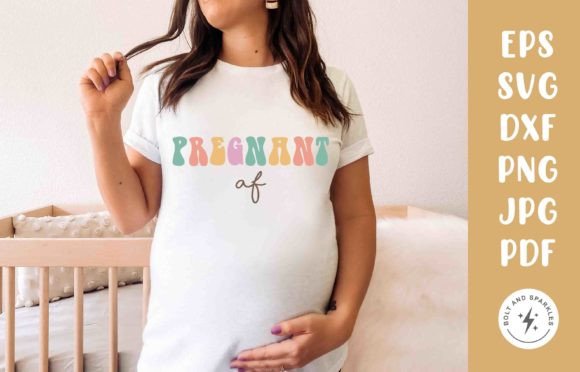
Reviewing the Pregnant AF, SVG for Real Embroidery Projects
As a designer who spends half my life digitizing and the other half stitching, I have learned that not every digital file translates well to thread. We see thousands of listings for Crafts and Graphics, but few hold up under the needle. Recently, I downloaded the Pregnant AF, SVG to test its viability for a client’s boutique line of maternity apparel. The goal was simple: determine if this retro-inspired, humorous design could carry the weight of a commercial product without losing clarity or charm during the stitching process.
First Impressions and Visual Personality
The moment I opened the files, the mood was unmistakable. This is not a delicate, floral nursery motif. It is bold, unapologetic, and steeped in retro aesthetics. The phrase "Pregnant AF" suggests a modern, candid approach to pregnancy, moving away from traditional sweetness toward something more authentic and relatable. For an embroidery designer, this attitude dictates the stitch strategy. You cannot treat this with fragile satin stitches alone; it needs body and presence.
The layout appears balanced, with a clear hierarchy between the text and any accompanying graphic elements. In the context of embroidery project planning, this visual personality fits naturally on items meant to be seen and discussed. It is a conversation starter. When evaluating the included formats—SVG, EPS, DXF, PDF, JPG, and PNG—I immediately noted the versatility. While the vector files are essential for scaling in digitizing software, the high-resolution PNG allows for quick mockups to show clients before a single thread is loaded into the machine.
Real-World Application: The Sweatshirt Test
To truly understand how Pregnant AF, SVG performs, I moved beyond the screen and into the studio. My test case was a custom oversized sweatshirt, a staple in modern custom apparel. The client wanted a piece that felt comfortable yet stylish, suitable for casual wear or a baby shower gift that didn’t feel overly sentimental.
I imported the SVG into my digitizing software to assess the pathing. The retro font style presented a specific challenge: ensuring the thick strokes did not become too dense, which can cause puckering on knit fabrics. By adjusting the stitch density and incorporating a mix of fill stitch for the larger letter areas and satin stitch for finer details, I maintained the bold look without compromising the fabric’s integrity. The result was a crisp, raised texture that popped against the heather grey fleece. This is where the design shines—it transforms a basic garment into a statement handmade product.
Versatility Across Product Lines
Beyond sweatshirts, this design has significant potential across various categories. For Etsy sellers and small shop product creators, versatility is key to maximizing ROI on a single digital embroidery file. Here is how I envision it working in different contexts:
- Tote Bag Design: The bold lines hold up well on canvas. Using a heavier thread weight can enhance the retro vibe, making it a practical and funny accessory for hospital bags or grocery runs.
- Embroidered Patch: Creating a merrow-edge patch allows customers to apply the design to multiple items. This is ideal for craft business owners who want to offer add-ons without embroidering directly onto delicate garments.
- Aprons and Kitchen Towels: For a humorous take on nesting, this design works on durable cotton twill. However, care must be taken with stabilizer choice to prevent distortion during washing.
- Cap Embroidery: While possible, curved surfaces require careful digitizing. The text must be arched slightly to follow the crown’s shape, ensuring it remains legible from a distance.
Navigating Technical Challenges
No design is without its pitfalls, and honest review requires addressing where Pregnant AF, SVG demands caution. The retro aesthetic often implies solid, blocky shapes. On stretchy fabric or thin materials like jersey knits, heavy fill stitches can cause tunneling or stiffness. I recommend using a cut-away stabilizer for garments that will undergo frequent washing, such as baby embroidery items or daily-wear tees.
Additionally, consider the hoop size. If you are working with a smaller 4x4 hoop, you may need to scale the design down significantly. This risks losing the impact of the lettering. Tiny details in retro fonts can merge if the stitch count is too high relative to the size. Always run a test stitch on scrap fabric of the same type you intend to use for the final finished product. This step is non-negotiable for maintaining professionalism and customer trust.
Color selection also plays a pivotal role. While black and white offers a classic, high-contrast look, experimenting with muted retro tones—mustard, teal, or burnt orange—can enhance the thematic consistency. However, ensure sufficient contrast between the thread colors and the fabric texture. A low-contrast combination might look sophisticated in a printable mockup but disappear in real life.
Commercial Viability and Brand Consistency
For commercial embroidery professionals, the value of a design lies in its ability to sell. The "Pregnant AF" theme taps into a market that values humor and authenticity. It appeals to a demographic that might shy away from traditional "Baby on Board" messaging. By offering this design, you position your brand as modern, inclusive, and in tune with current cultural trends.
When listing this as a personalized gift or part of a boutique collection, highlight the quality of the stitch work. Buyers engage more with products that show attention to detail. Use the included JPG and PNG files to create compelling social media content, showing the design on various backgrounds. This helps potential customers visualize the embroidery file in their own lives, whether as a holiday embroidery gift for a friend or a unique addition to their maternity wardrobe.
Final Designer Notes
Before committing to a large production run or listing this in your shop, keep these practical tips in mind:
- Check Licensing: Confirm the license terms provided with the download. Ensure you have the right to use the design for commercial design assets and finished goods.
- Test Stitch Density: Retro fonts can be dense. Adjust your underlay stitches to provide a stable foundation without adding unnecessary bulk.
- Mockup Variations: Use the high-resolution PNG to test the design on both light and dark fabrics digitally before stitching. This saves time and thread.
- Inspect Small Details: Zoom in on the vector file. Look for any nodes or points that might cause needle breaks or jumps during stitching.
In conclusion, Pregnant AF, SVG is a strong contender for designers looking to add edge and humor to their portfolio. It requires thoughtful digitizing and material selection, but when executed correctly, it delivers a high-impact embroidered patch or garment detail that resonates with modern buyers. It is not just a graphic; it is a tool for creating memorable, shareable, and sellable Crafts that stand out in a crowded marketplace.